

Money For Nothing
And the chips are free?

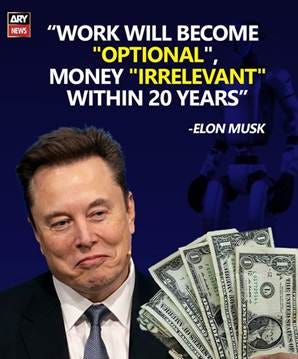
Elon Musk recently discussed how he believes that money will be irrelevant in 10-20 years since the new AI world would create abundance for all the necessities of life, thus making jobs and money obsolete.
10-20 years? Yikes! Or, not yikes?
The idea that we could live in a society with no money seems quite enticing, because I’ve lost too many nights sleep, struggling with how that emergency bill will be paid over the decades. Of course, it ended up being put on a credit card, paid with interest and later rolled over when Mary offered 0 percent to pay Peter after Paul’s 0 interest rate expired. [My husband and I chose to pay for catholic school when we couldn’t afford it, but we did it anyway, until parochial high school was double the cost of elementary school, so both kids went to public high school – and what an eye opener that was during the Obama years. And then there was college…]
But the part where Musk says we would get a “universal high income” - income not for just the basics to live, but to live well from whom else – the government - is more than scary.
Who defines what living well means? The government and not the taxpayers. Will living well and abundance be the soviet definition?
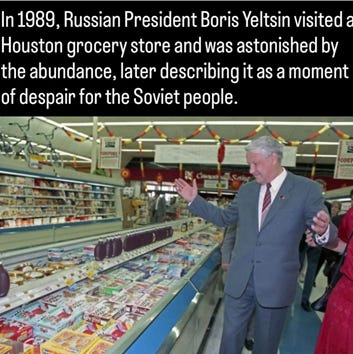
But why would we need income if abundance is the norm and money is irrelevant?

What do we do in this age when there is a contradiction? Ask Claude:
“You’ve spotted an interesting contradiction in Musk’s statements. The tension you’re noticing is real, and it’s one that critics have pointed out.
Here’s what appears to be happening: Musk is talking about two different timeframes or transitional states:
The contradiction:
“Money will stop being relevant” in a future with abundance from AI and robots Yahoo FinanceFortune
Yet he advocates for “universal high income” that would let people “have any products or services that they want” Yahoo Finance
The likely explanation: Universal high income seems to be his proposal for a transitional period before we reach true post-scarcity. During this phase, robots produce abundance, but we haven’t yet restructured society to eliminate money entirely. The government would distribute income so people can participate in an economy that still uses currency, even though they’re no longer working traditional jobs.
The deeper problem: As some economists have noted, if there’s genuine abundance where goods and services cost almost nothing to produce, you wouldn’t need high income—you’d barely need any income. Conversely, if you need substantial income to access what you want, then scarcity and money haven’t actually become irrelevant.
But one of the biggest questions we should be asking is how will we power the AI machine?
When will those super smart physicists exclaim, Eureka?

Is nuclear fusion the energy answer we need? Nuclear fission, while it is operable, cheap, carbon free, and efficient, still yields all that radioactive waste, while fusion is clean and generates boundless energy to meet the energy requirements that AI will demand. But we are not there yet.
Throughout humanity, we have transitioned to new forms of technology that have advanced us as a society – or so we tell ourselves. But anything that requires dependency on the government is a dead end for the people and society at large, and dependency on the government becomes the tyrannical government Huxley and Orwell warned us about.
Is AI moving at a faster pace than our available energy technology?
Articles like “A New Breakthrough in Fusion Reactors Could Solve a Major Problem Scientists Have Faced” sound exciting until the reality is what they always say – it’s at least 30-50 years from now. If AI is going to change the world in 10-20 years, how will we power the AI machine without fusion?
There may be bigger obstacles with fusion, but from my understanding, harvesting enough tritium is one of the big problems, since it has a short “shelf” life and is hardly abundant like deuterium.
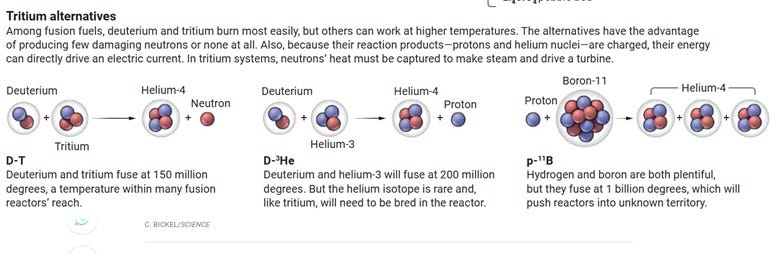
The U.S. Department of Energy explains:
Deuterium and tritium are promising fuels for producing energy in future power plants based on fusion energy. Fusion energy powers the Sun and other stars through fusion. Deuterium and tritium are isotopes of hydrogen, the most abundant element in the universe. While all isotopes of hydrogen have one proton, deuterium also has one neutron and tritium has two, so their ion masses are heavier than protium, the isotope of hydrogen with no neutrons. When deuterium and tritium fuse, they create a helium atom, which has two protons and two neutrons, and an energetic neutron. These energetic neutrons could be the basis for generating energy in future fusion power plants.
On Earth, fusion has the potential to supply safe, clean, and relatively limitless energy. However, there are requirements to make these power plants a reality. One key requirement is identifying a viable fuel to sustain fusion. Fusion can occur with elements weighing less than iron. But most elements will not fuse unless they are in the interior of a star. To create burning plasmas in experimental fusion power plants such as tokamaks and stellarators, scientists seek a fuel that is available and relatively easy to produce and store. One current possibility is deuterium-tritium fuel. This fuel reaches fusion conditions at lower temperatures than other elements and releases more energy than other fusion reactions. Future commercially feasible fusion plants would need a robust supply chain for both hydrogen isotopes.
Deuterium is common: about 1 out of every 6,500 hydrogen atoms in seawater is in the form of deuterium. This means our oceans contain many tons of this hydrogen isotope. The fusion energy released from just 1 gram of deuterium-tritium fuel equals the energy from about 2,400 gallons of oil.
Tritium is not common. It is a radioactive isotope that decays relatively quickly, with a 12-year half-life. It is rare in nature and not immediately available for use in potential power plants. However, there is a process to produce tritium. For example, exposing the more common element lithium to energetic neutrons can generate tritium through low-energy nuclear fission. Scientists are actively researching how to produce tritium, a process called breeding, as part of a subsystem of a fusion power plant at the rate needed to make future power plants self-sufficient for their tritium supply. Tritium breeding systems will require enriched lithium, specifically the isotope lithium-6 (with three protons and three neutrons). Since lithium-6 is far less abundant than other lithium isotopes, scientists are actively researching lithium isotope separation with an emphasis on scalable, environmentally friendly methods.
But all that aside, I can’t help but think what our society will look like if AI does all the work. Will we become the fat, consumer-driven, lazy slackers that WALL-E encountered, people who have no understanding of Love and just want more crap to eat with shiny things to buy?

It feels like we are sleepwalking into the AI world, but some believe AI will be good and are moonwalking towards AI.
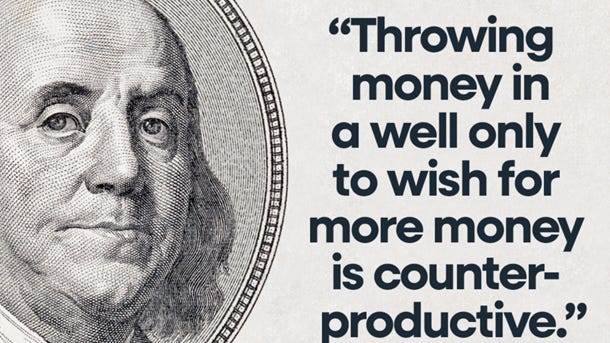
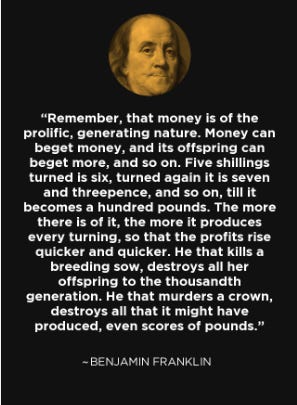
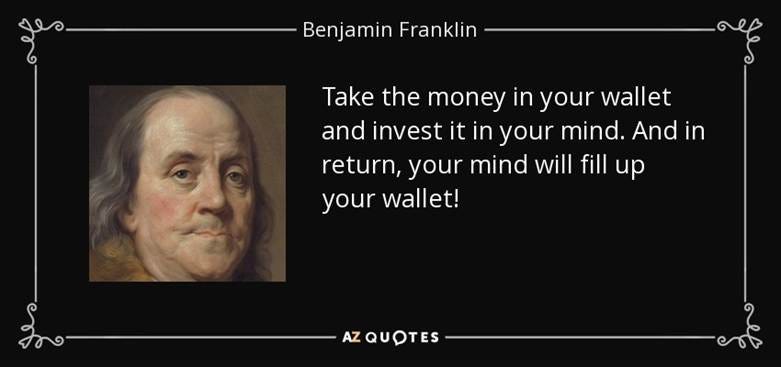
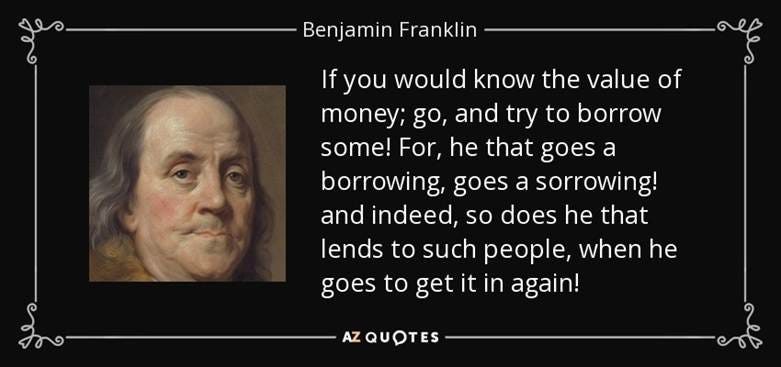
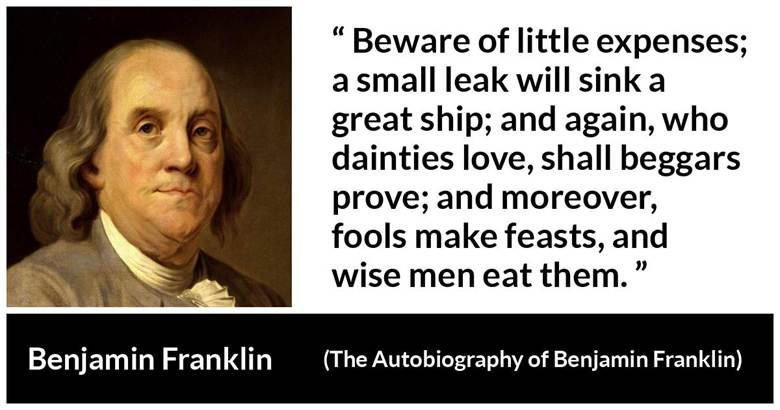
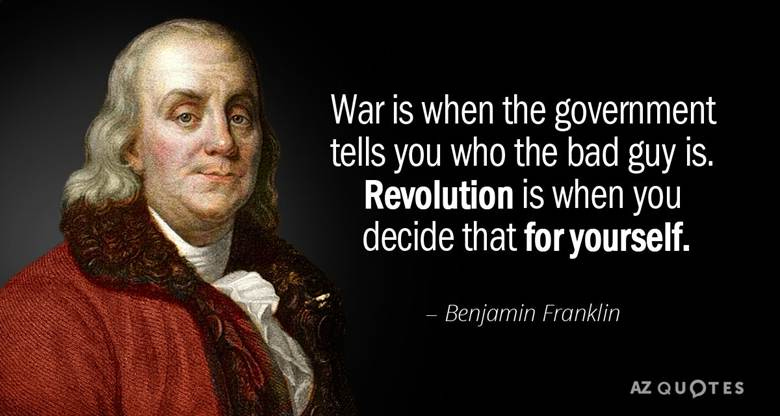
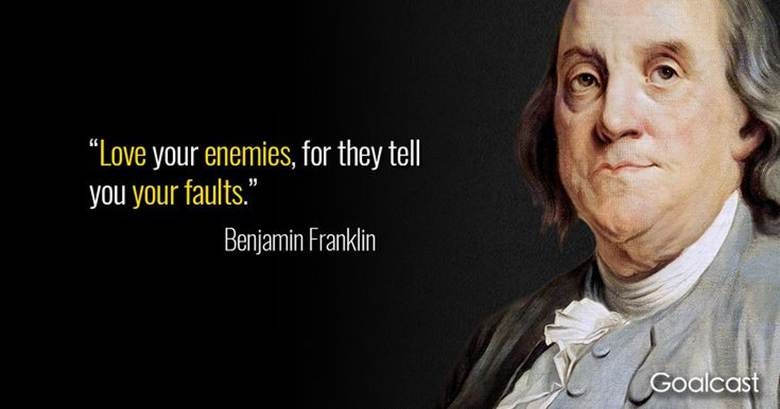
If we get rid of money, does that mean we throw away Ben Franklin’s wisdom as well? Bye-bye Ben?




![Those who would give up essential Liberty, to purchase a little temporary Safety, deserve neither Liberty nor Safety" - Benjamin Franklin [1200x1200] : r/QuotesPorn](https://substackcdn.com/image/fetch/$s_!UJ5X!,f_auto,q_auto:good,fl_progressive:steep/https%3A%2F%2Fsubstack-post-media.s3.amazonaws.com%2Fpublic%2Fimages%2F63fc190d-3eb2-427b-bbe7-89e91d517b03_360x360.png "Those who would give up essential Liberty, to purchase a little temporary Safety, deserve neither Liberty nor Safety\" - Benjamin Franklin [1200x1200] : r/QuotesPorn")
Maybe we should enlist AI to figure out the best route to nuclear fusion. Once it gets there it would be sort of like a perpetual motion machine.
"The government would distribute income so people can participate in an economy that still uses currency, even though they’re no longer working traditional jobs."
What could possibly go wrong?
My trust in government has completely evaporated over the last few decades. Power should be in the hands of the people not government. History shows that powerful governments become corrupted and turn on the people, for their own good of course and for the sake of fairness and equality! Ha!